Review
To make the perfect omelet, we tested these six frying pans
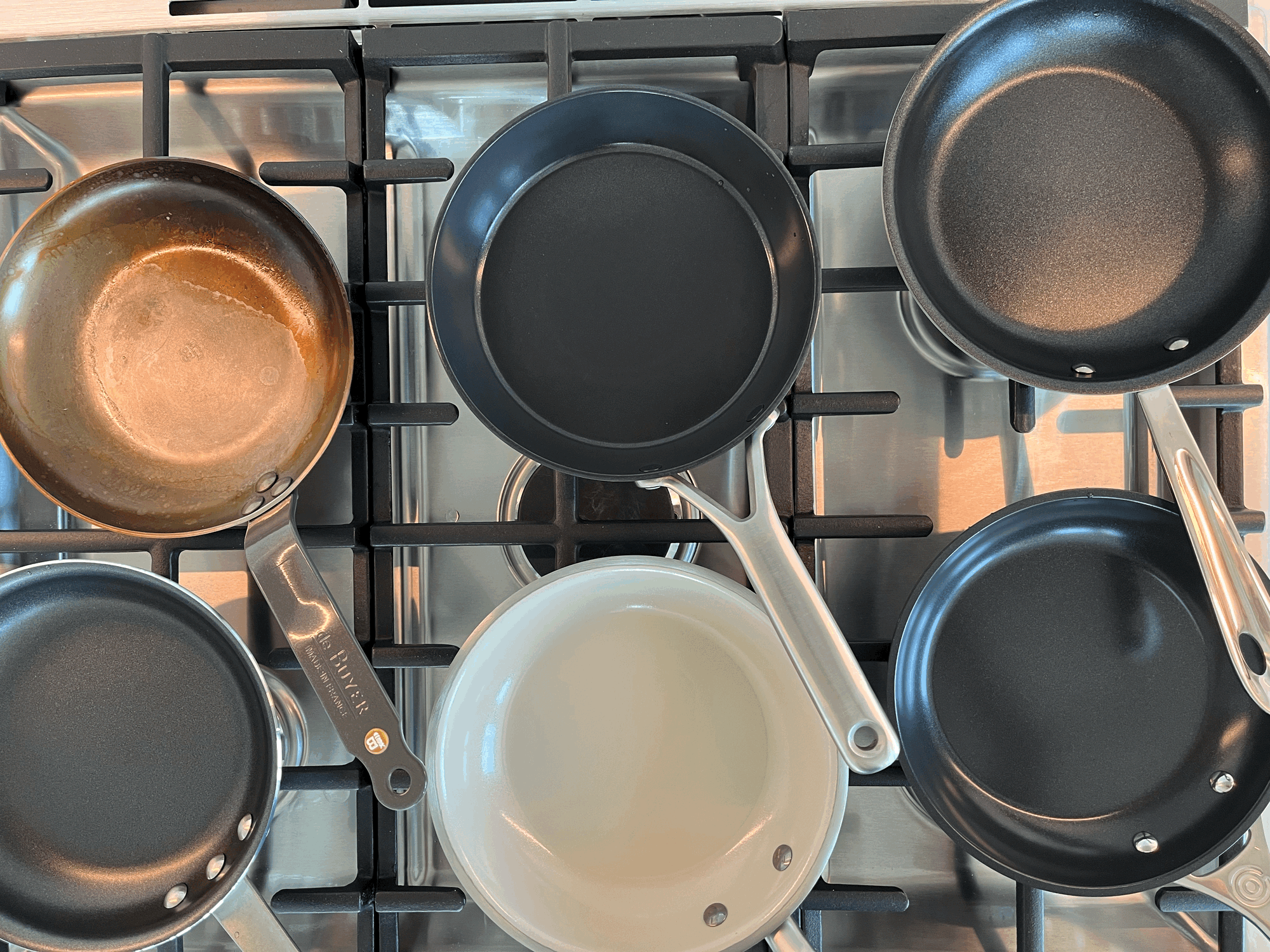
Our test compared six 8-inch frying pans to see which ones made the best French omelet and traditional omelets. The winning pans made the process easier while delivering creamy, classic dishes.
By Karen Jensen
wWatching culinary legends Jacques Pépin and Julia Child cook omelets has always inspired me. Their mastery of the process — their intimate knowledge of every shake, flip and fold — still sets the standard for the perfect omelet. But despite years of practicing their techniques, I still couldn't reliably turn out omelets as perfect as the ones I could order at a high-quality French bistro.
That got me wondering whether the pan I was using was part of the challenge.
I decided to put the All-Clad D5 nonstick pan I've been using to the test against five other widely available frying pans. Rather than comparing only similar models, I chose six pans representing three different cooking surfaces: traditional PTFE nonstick, ceramic nonstick and carbon steel. The lineup included premium and budget-friendly options, as well as the de Buyer Mineral B, an iconic French pan that's often recommended for omelets.
The test
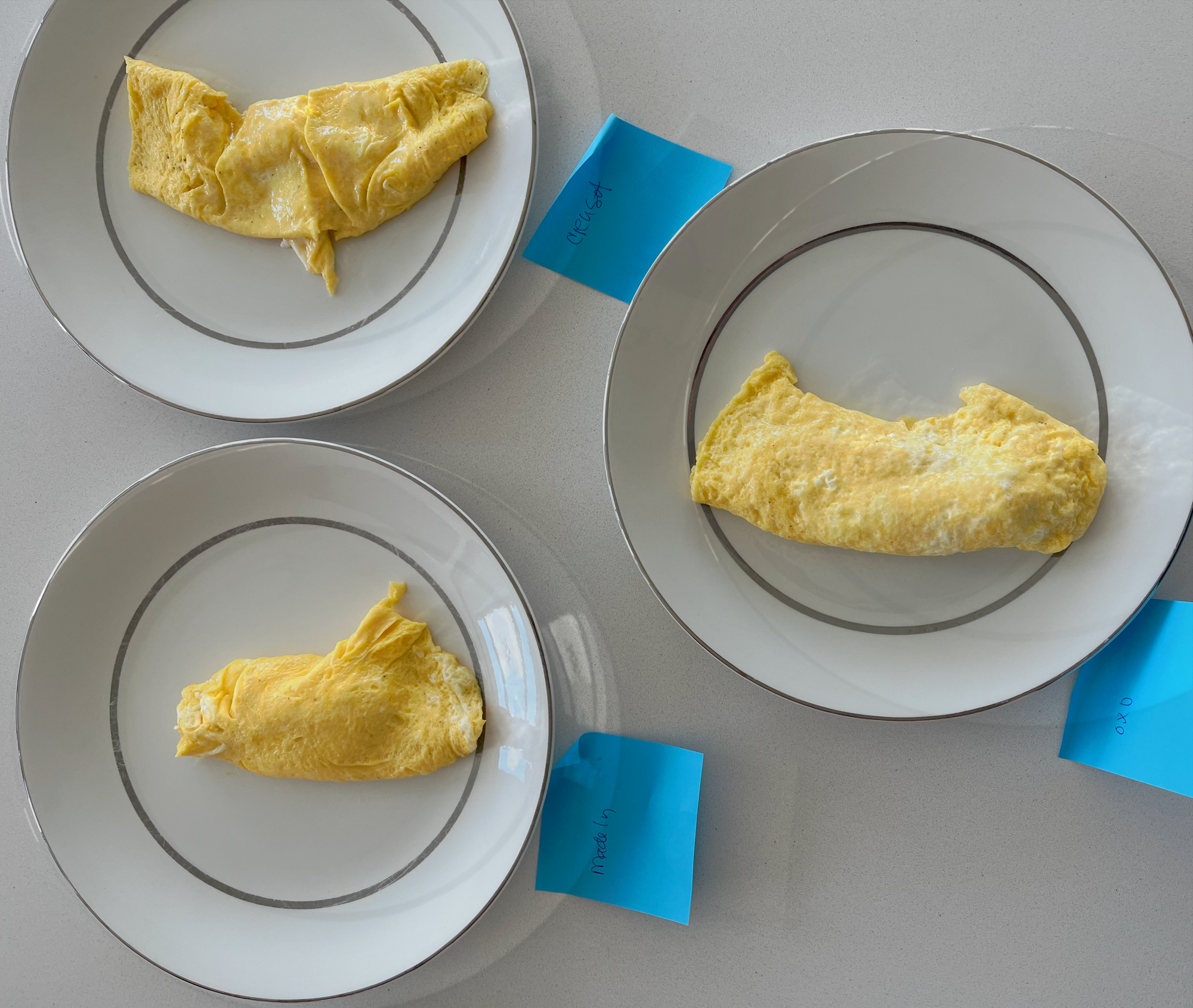
To compare them, I made both a French omelet and a traditional omelet in each pan. French omelets require careful heat control and constant shaking to create a smooth exterior and creamy interior, while traditional omelets rely on stirring, folding and browning.
Throughout testing, I evaluated how evenly each pan heated, how easily the eggs released, and how much control it offered while shaking, stirring, rolling and folding the omelet. I also paid close attention to ergonomics, since the weight, balance and handle design can make a surprising difference when you're maneuvering delicate eggs.
French versus traditional omelets
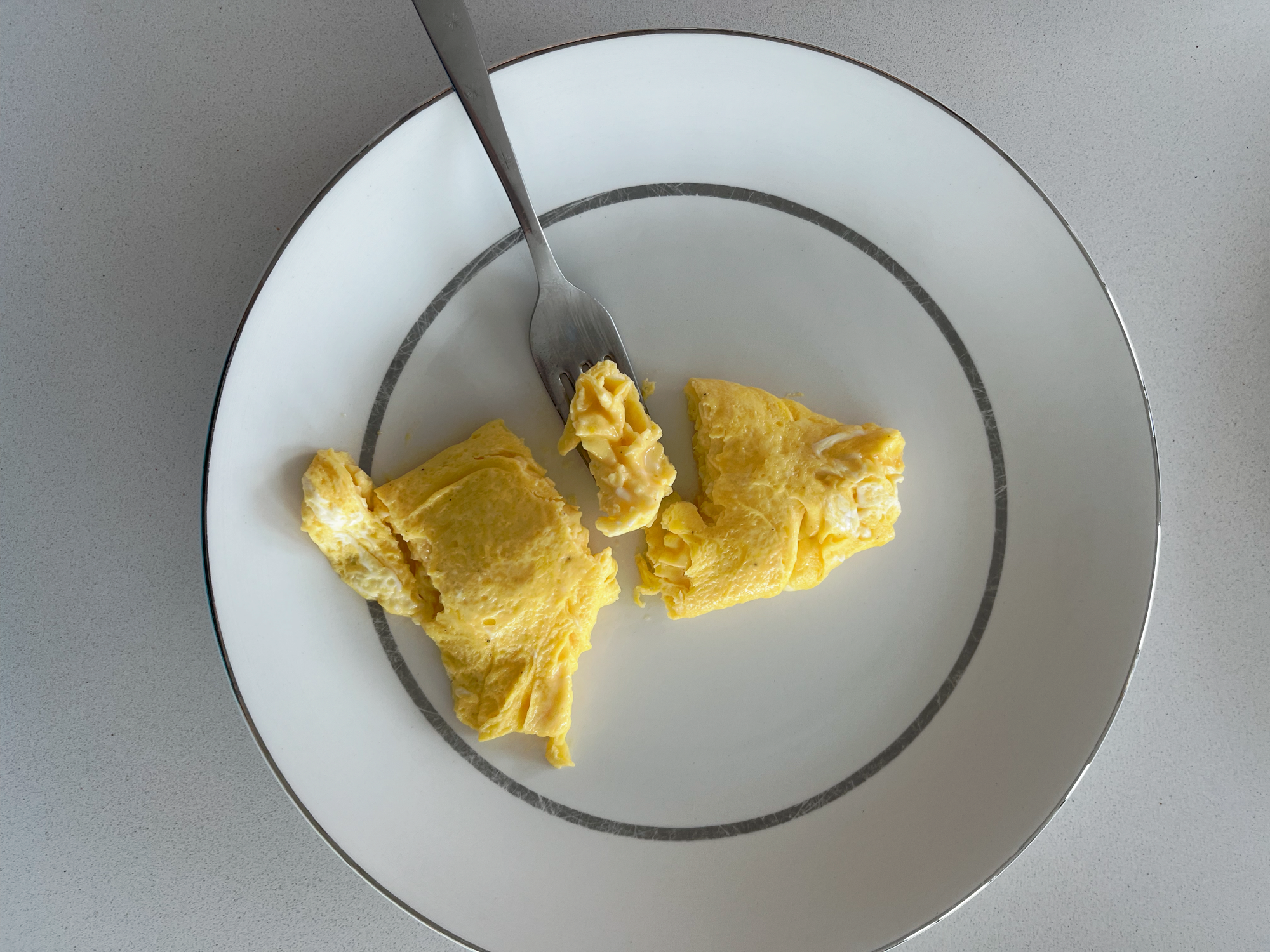
Though both are made from beaten eggs, French and traditional omelets differ in both technique and the finished result. A classic French omelet is pale, smooth and delicately rolled with a soft, creamy interior. A traditional omelet has larger curds, light golden browning, and is often folded over fillings such as cheese, vegetables or ham.
French omelet
- Beat the eggs thoroughly and melt butter over medium-high heat until the foam just begins to subside.
- Pour in the eggs and immediately begin the classic French shaking technique. As Julia Child demonstrated, continuously shake the pan back and forth while giving it short forward jerks to keep the eggs moving, creating very fine curds.
- As the eggs become lightly coagulated but remain creamy on top, tilt the pan and roll the omelet into a cylinder.
- Invert the pan onto a plate and, if needed, use the edge of the pan to shape the omelet.
Traditional omelet
- Beat the eggs thoroughly and melt butter in the pan over medium heat until it foams.
- Pour in the eggs and stir continuously with a fork or spatula to form large, tender curds.
- Once the eggs are mostly set but still slightly moist on top, fold both sides of the omelet toward the center.
- Add a little butter to the pan and cook briefly until the omelet is lightly browned.
- Tap the omelet to one side of the pan, then invert it onto a plate.
For a demonstration of both styles, watch Jacques Pépin prepare a French omelet and a traditional omelet. For Julia Child's classic lesson on the "shake and jerk" technique, watch The Omelet Show.
Why materials matter
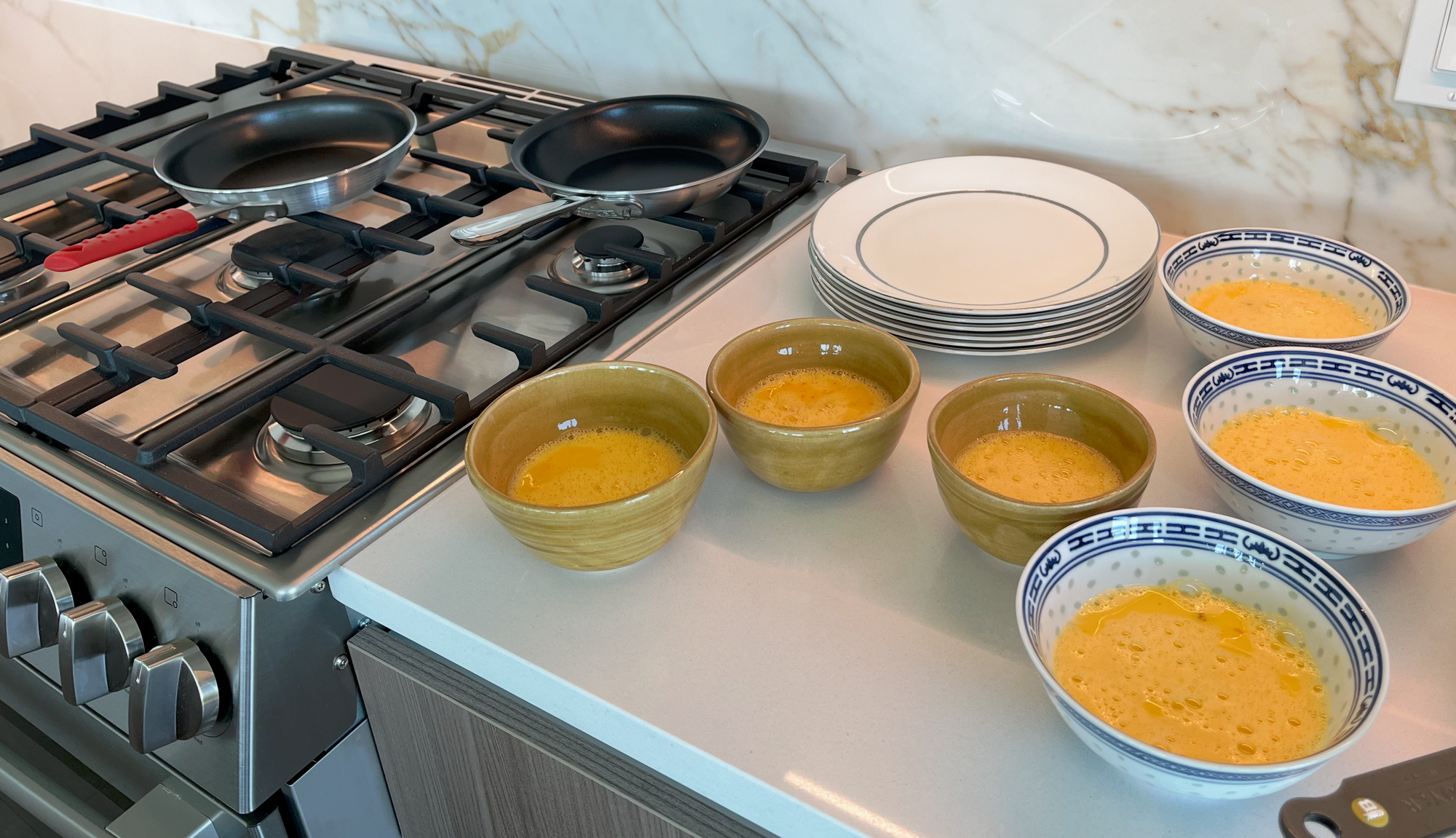
An omelet pan's cooking surface determines how easily eggs release, but the pan's underlying construction also affects how quickly and evenly it heats — and how forgiving it is to cook with.
PTFE (polytetrafluoroethylene) is the traditional nonstick coating found on most egg pans. It's exceptionally slippery, making it the easiest surface for releasing eggs cleanly and rolling delicate omelets. Because it can degrade at very high temperatures, PTFE pans are best used over low to medium heat.
Ceramic nonstick is a thin, glass-like coating made primarily from silica that's naturally slick when new. Many ceramic-coated pans are marketed as being free of PFAS (a family of synthetic "forever chemicals" that includes PFOA), as well as heavy metals such as lead and cadmium, though the exact formulation varies by manufacturer. Ceramic coatings generally tolerate higher temperatures than PTFE but may lose their nonstick performance sooner with regular use.
Carbon steel has no nonstick coating. Instead, it develops a dark patina through seasoning — repeatedly heating thin layers of oil until they bond to the metal. As the patina builds over time, the cooking surface becomes increasingly naturally nonstick, though it requires more maintenance than coated pans and can rust if not dried and cared for properly.
The metal beneath the cooking surface matters, too. Aluminum heats quickly and distributes heat evenly, making it ideal for eggs. Hard-anodized aluminum is aluminum that's been electrochemically treated to create a harder, more durable, scratch-resistant base. Stainless steel is valued for its strength and durability but conducts heat relatively poorly, so it's often bonded to aluminum to improve cooking performance. Carbon steel heats more slowly than aluminum but responds more quickly to changes in burner temperature than cast iron, making it a favorite for cooks who want precise control.
The reviews
Top pick
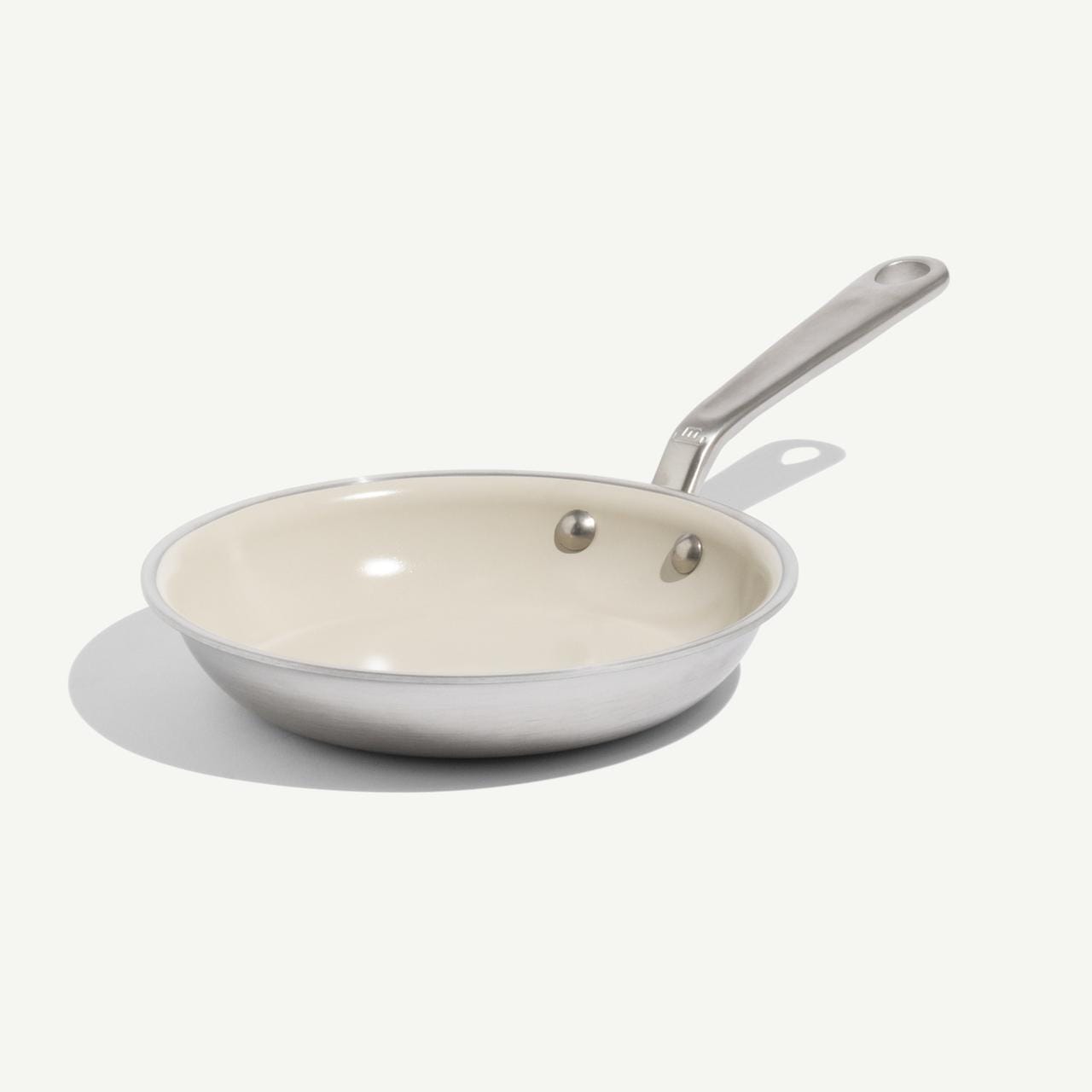
Made In CeramiClad 2.0 Nonstick Frying Pan
A premium ceramic pan with great ergonomics
The Made In CeramiClad 2.0 was the biggest surprise of my testing. It wasn't just the best ceramic pan I tried — it stood out well ahead of the rest of the lineup. Everything about the pan felt balanced, predictable and unusually easy to control, making the entire omelet cooking process feel almost effortless.
French omelets showed off the Made In's strengths. The pan was light enough to shake comfortably, the handle design made flipping easy, and the eggs stayed together throughout cooking instead of breaking apart while I worked them around the pan. The result was a smooth, delicate omelet with fine curds that looked and tasted remarkably close to what I'd been trying to achieve. At times, it almost felt like the pan was doing the work for me.
The Made In was just as impressive for traditional omelets. The eggs cooked quickly while stirring, folded and flipped easily, and browned nicely while remaining surprisingly light and tender. Even with the larger curds and browning that define this style, the finished omelet retained a lighter texture than those from the other pans I tested.
The CeramiClad's five-ply construction—stainless steel surrounding three layers of aluminum—likely contributes to its balanced performance, combining even heating with good responsiveness. The drawbacks are relatively minor. The brushed stainless exterior showed some discoloration during testing, and the ceramic cooking surface is warranted for only two years. But if you're looking for a pan that can help you cook better omelets, this is the one I'd recommend.
Pros
- Excellent food release
- Made without PFAS, PFOA, lead or cadmium
- Ergonomic handle for easier control
Cons
- Warranty limited to two years
- Exterior surface may discolor
- The interior rim is left uncoated
Key Specs
- Materials: Stainless steel exterior and interior layers around three layers of aluminum, hollow stainless steel handle
- Coating: Four-layer ceramic coating
- Maximum temperature: 550 Fahrenheit
- Weight: 1.75 pounds
- Cleaning: Hand wash only
- Compatibility: All cooktops
- Warranty: Two years
- Origin: Made in Italy
Runner up
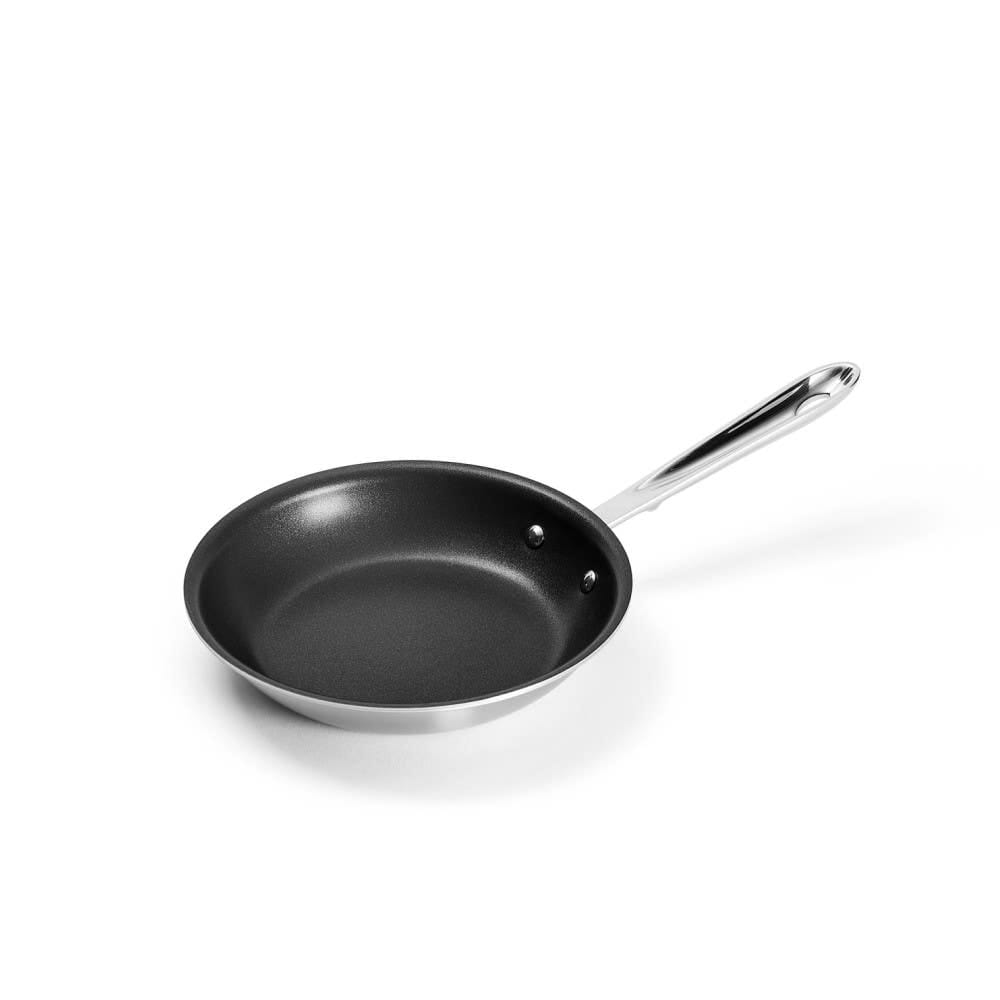
All-Clad D5 Brushed Pro Nonstick Frying Pan
The classic five-layer PTFE pan made in the USA
The All-Clad D5 had been my go-to omelet pan for years, so I was especially interested to see how it compared with the other pans. I came away with an even greater appreciation for it. Whether I was making a French or traditional omelet, it consistently delivered dependable, predictable results with even heating and effortless food release. Just as important, it was one of the most forgiving pans in the lineup, allowing me to focus on technique rather than managing the pan.
French omelets came together beautifully. The pan provided steady, predictable heat that made controlling the cooking process easy, and it released the eggs effortlessly. My only real complaint was the handle. During the final flip, its blunt edges dug into my hand, making the maneuver less comfortable than with several of the other pans I tested.
The D5 was even more at home with traditional omelets. The eggs cooked evenly while stirring, folded neatly without sticking, and developed light, consistent browning. The finished omelets held their shape beautifully and were reliably tender, though they weren't quite as light and delicate as those made in the Made In CeramiClad.
The D5's five alternating layers of stainless steel and aluminum likely contribute to its balanced cooking performance. Add in a lifetime warranty and U.S. manufacturing, and it's a pan that's built to last. If you prefer a traditional PTFE nonstick pan, the D5 is a dependable choice for consistently great omelets.
Pros
- Heats evenly
- Attractive polished and stainless steel design
- Lifetime warranty
Cons
- Blunt handle edges can be uncomfortable to grip
- Expensive
- Heavy compared to other options
Key Specs
- Materials: Five alternating layers of stainless steel and aluminum, cast stainless steel handle
- Coating: PTFE
- Maximum temperature: 500 F
- Weight: 1.9 pounds
- Cleaning: Hand wash only
- Compatibility: All cooktops
- Warranty: Lifetime
- Origin: Made in the U.S.
Worth considering
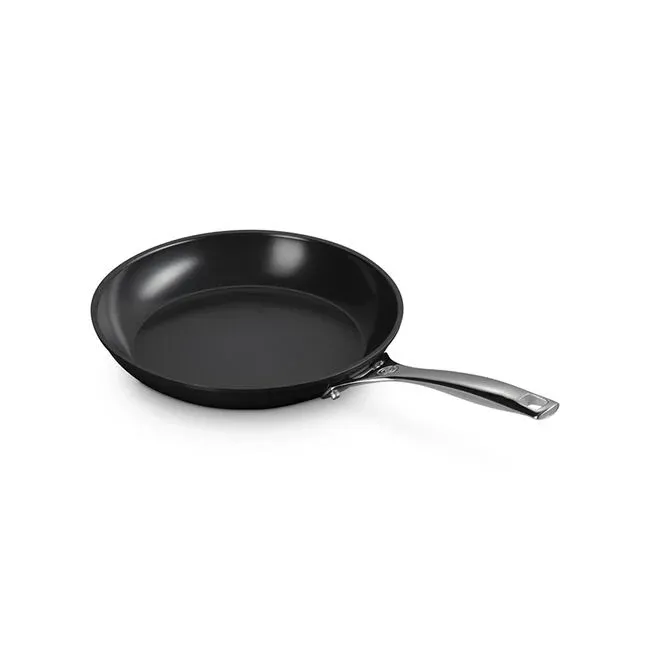
Le Creuset Essential Nonstick Ceramic Frying Pan
A ceramic-coated aluminum pan from a heritage brand
Le Creuset is best known for its enameled cast iron cookware, but its ceramic-coated aluminum frying pan proved to be a capable omelet pan. Throughout testing, it produced light, delicate eggs, and the slick ceramic cooking surface released them easily. It wasn't as polished or forgiving as the Made In CeramiClad, but it consistently delivered good results.
The Le Creuset's strengths were its responsiveness and excellent food release. The ceramic surface made it easy to cook and fold both French and traditional omelets without sticking, and the eggs were especially tender. At the same time, its lightweight aluminum construction required closer attention to heat than the multi-ply pans I tested. Small temperature changes had a greater effect on the cooking process, leaving less room for error.
That extra responsiveness was most noticeable with traditional omelets. The eggs browned more quickly than I expected, making it harder to achieve the same consistently neat shape and tender texture as with the top-performing pans. I also found the handle less comfortable to grip, making the pan feel less natural to maneuver.
The Le Creuset's lightweight aluminum construction gives it a distinctly responsive feel, though it also requires more attention throughout cooking. It consistently produced good omelets, but I found myself gravitating toward other models that were easier to control and delivered more consistent results.
Pros
- Dishwasher and metal utensil safe
- Ceramic-coated on the interior and exterior
- PFAS-free
Cons
- High heat conductivity makes it unforgiving
- Lacks the refinement of other Le Creuset cookware
- Handle design is uncomfortable to grip
Key Specs
- Materials: Aluminum, stainless steel handle
- Coating: Ceramic on interior and exterior.
- Maximum temperature:550 F
- Weight: 1.8 pounds
- Cleaning: Dishwasher safe
- Compatibility: All cooktops
- Warranty: 10 years
- Origin: Made in China
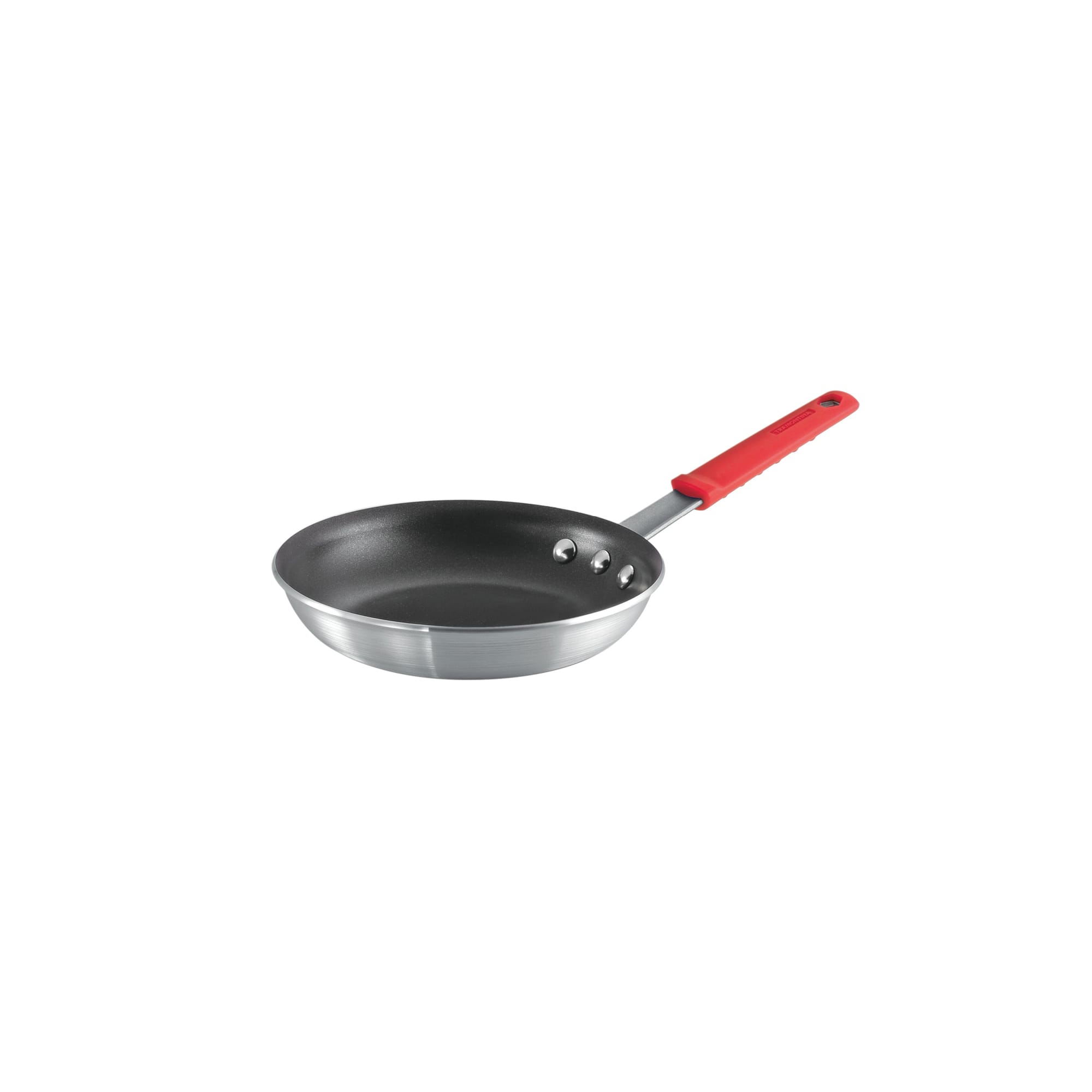
Tramontina Professional Nonstick Frying Pan
A budget-friendly aluminum pan with PTFE coating
The Tramontina Professional nonstick frying pan proves that you don't have to spend a lot to get a decent omelet pan. It consistently released eggs well and produced respectable omelets throughout testing. While it lacked the refinement of the higher-end pans, it delivered remarkable results for the price.
The pan's biggest limitation was its lightweight aluminum construction. It heated very quickly, making it harder to achieve the tender texture and gentle browning I was looking for, particularly compared with the premium multi-ply pans. The nonstick surface released eggs well, but the overall cooking experience felt less controlled.
The lightweight construction also affected the pan's handling. It felt somewhat unbalanced on the burner, and its flat cast stainless steel handle made the final flip feel less comfortable and natural. The removable silicone grip was a nice touch, adding comfort and insulation, though you'll need to remove it if you want to use the pan at higher oven temperatures.
The Tramontina's all-aluminum construction helps explain both its affordable price and quick-heating performance, but it also demands more attention than the multi-ply pans I tested. For cooks looking for a capable, budget-friendly nonstick pan, it offers excellent value. If you're willing to spend more, however, the higher-end pans make it easier to produce lighter, more refined omelets with less effort.
Pros
- Affordable price point
- Lifetime warranty
- Handle comes with a removable silicone grip
Cons
- Light, unbalanced design easily tips on gas burners
- Overcooks quickly due to high heat transfer
- Aluminum exterior will discolor in the dishwasher
Key Specs
- Materials: Aluminum, cast stainless steel handle with removable silicone grip
- Coating: PTFE
- Maximum temperature: 400 F with silicone grip
- Weight: 1.6 pounds
- Cleaning: Dishwasher safe
- Compatibility: Gas, electric, and ceramic glass cooktops
- Warranty: Lifetime
- Origin: Made in Brazil
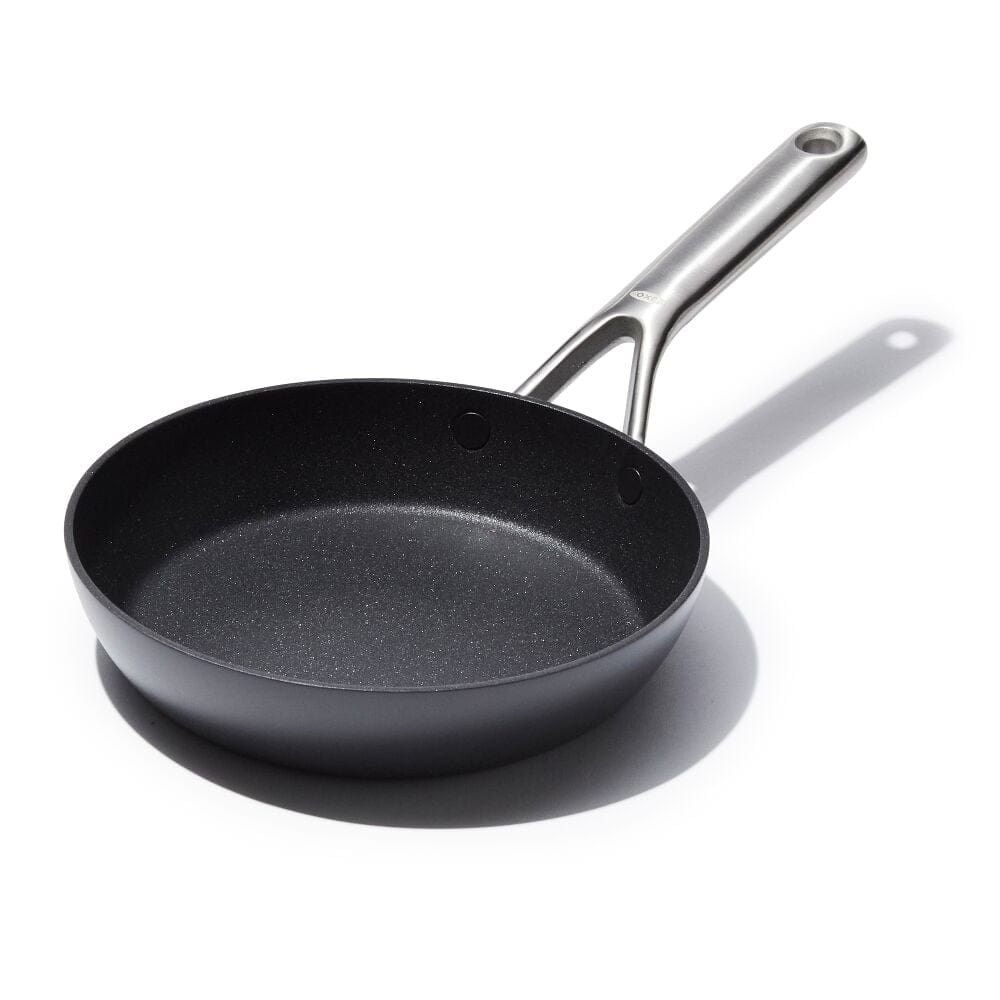
OXO Ceramic Professional Nonstick Frypan
A high-sided, ceramic pan of hard-anodized aluminum
The OXO Ceramic Professional is a thoughtfully designed pan with several standout features. Its rounded stainless steel handle was among the most comfortable in the group, the ceramic-coated rivets created a completely smooth cooking surface, and the hard-anodized aluminum body gave the pan a durable, well-built feel. Unfortunately, those strengths didn't translate into the omelet performance I was hoping for.
The OXO's biggest limitation was its shape. Its higher, steeper sides prevented the eggs from flipping into the center of the pan during the classic French shaking technique. When combined with aluminum's fast heat transfer, the eggs coagulated more quickly, making it harder to achieve the smooth, creamy texture I was aiming for.
Traditional omelets were somewhat more successful, though they still fell short of the top performers. The ceramic nonstick coating released the eggs well, but I had less time to stir and fold before they browned. The finished omelets lacked the tender texture and refined appearance of those made in the best-performing pans.
Overall, the OXO is a well-designed, durable ceramic-coated pan with a few characteristics that make it less ideal for omelets. If you're looking for a versatile ceramic-coated frying pan for everyday cooking, it's worth considering. For omelets, however, I found that I preferred pans whose shape and heat characteristics made classic omelet techniques easier to execute.
Pros
- Interior rivets are ceramic-coated
- Hard-anodized body is durable and scratch-resistant
- Dishwasher and metal-utensil safe
Cons
- High sides make sliding food out challenging
- More basic appearance than other options
- Less forgiving due to high heat conductivity
Key Specs
- Materials: Hard-anodized aluminum, stainless steel handle
- Coating: Ceramic reinforced with diamonds
- Maximum temperature: 600 F
- Weight: 1.8 pounds
- Cleaning: Dishwasher safe
- Compatibility: All cooktops
- Warranty: Lifetime for defects, two years for nonstick surface
- Origin: Made in China.
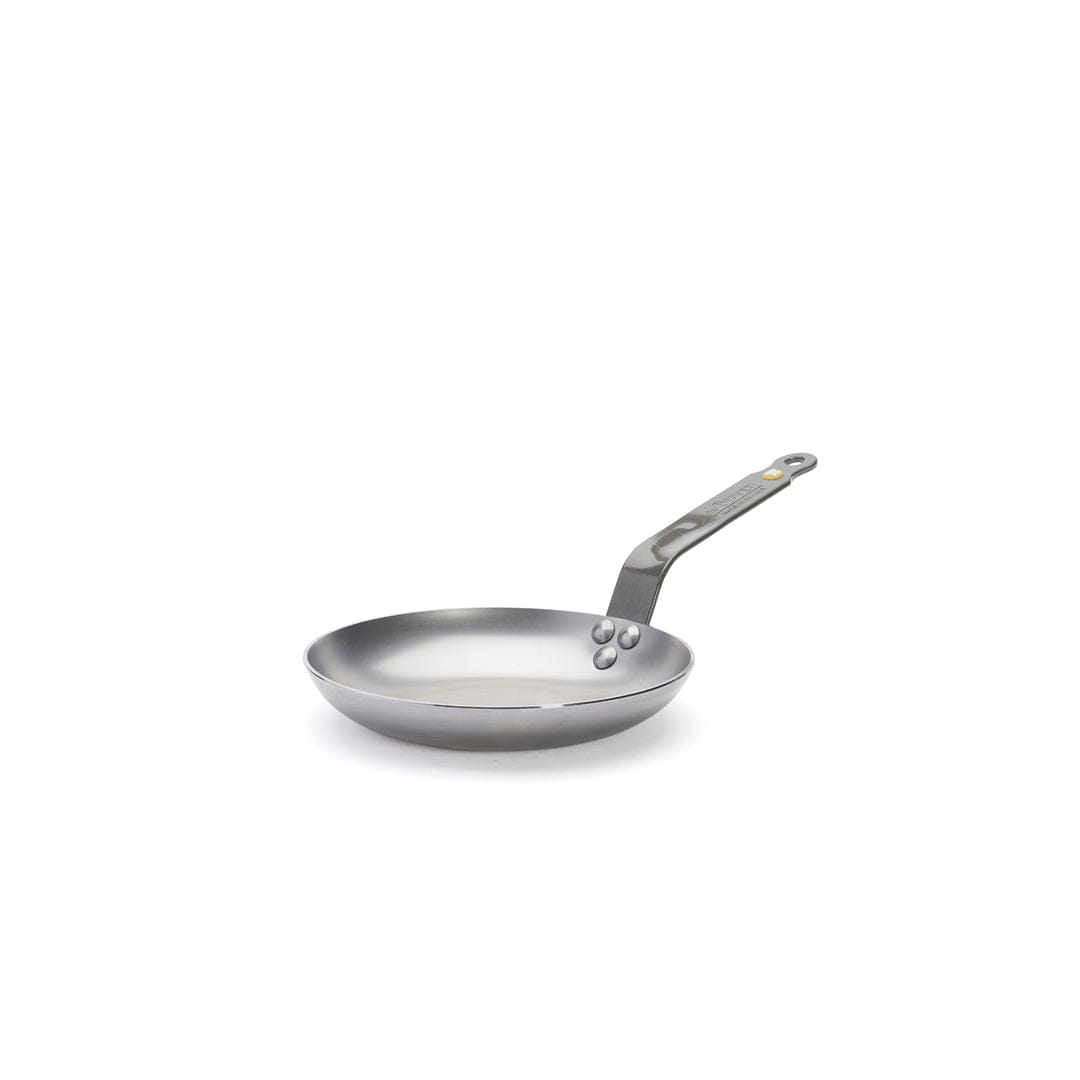
de Buyer Mineral B Carbon Steel Omelet Pan
The iconic French uncoated carbon steel frying pan
The de Buyer Mineral B is an iconic carbon steel omelet pan that's built around a very different philosophy than the other pans I tested. Instead of relying on a factory-applied nonstick coating, it develops a naturally nonstick cooking surface through seasoning — a process of repeatedly heating thin layers of oil until they bond to the metal. I also found it to be the most demanding pan in the lineup.
The de Buyer's design made French omelets especially challenging. Its weight made the repeated shaking and jerking motion harder to control, while the low sides made it difficult to keep the eggs in the pan. Before the eggs had fully coagulated, they also began sticking to the cooking surface. The flat steel handle compounded those challenges by offering little leverage during the final flip, and a small burr on its underside made it uncomfortable to hold.
Traditional omelets were even less successful. The eggs stuck almost immediately after I began stirring, browned before I could finish folding, and picked up a burnt-oil flavor that appeared to come from the freshly seasoned surface.
I also found the seasoning process unpleasant. It filled my kitchen with cooking-oil fumes, and knowing that the pan requires 10 to 20 uses before its natural nonstick properties fully develop made it difficult to evaluate alongside pans that performed well right out of the box. That ongoing maintenance is just part of owning a carbon steel pan. If you're willing to invest the time, the de Buyer may eventually develop the natural nonstick properties it's known for. For me, though, the extra maintenance outweighed the potential benefits.
Pros
- Made to last and improve with use
- Inexpensive given its potential longevity
- Lifetime warranty
- Fourth
Cons
- Requires seasoning and use to develop natural nonstick properties
- Flat-shaped handle makes control challenging
- Low sides and heavy weight limit maneuverability
Key Specs
- Materials: Carbon steel (99% iron, 1% carbon), epoxy-coated steel handle
- Coating: None
- Maximum temperature: 400 F
- Weight: 2.3 pounds
- Cleaning: Wipe clean
- Compatibility: All cooktops
- Warranty: Lifetime
- Origin: Made in France
This article is written and edited by a writer who selects the products and ensures the information provided is accurate. Product prices and availability are accurate as of the publication date. We may receive compensation from retailers and/or from purchases made through these links.